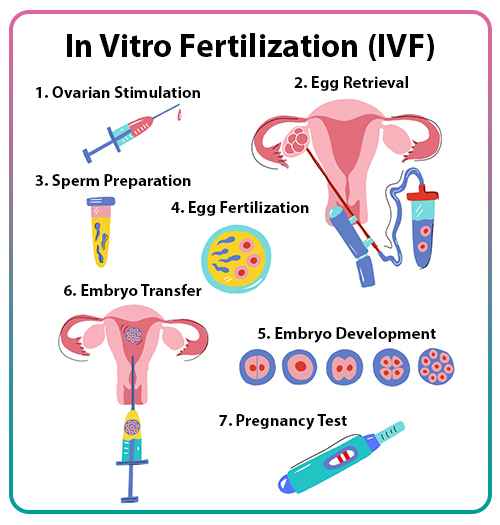
In Vitro Fertilization (IVF) is an advanced assisted reproductive technique used to help couples conceive when natural methods or simpler treatments have not been successful. In IVF, fertilization occurs outside the body in a controlled laboratory environment, where an egg is combined with sperm to form an embryo, which is then transferred into the uterus.
The IVF process involves several steps, beginning with ovarian stimulation using medications to produce multiple eggs. These eggs are then retrieved through a minor procedure and fertilized with sperm in the laboratory. Once healthy embryos develop, one or more are selected and transferred into the uterus to achieve pregnancy. The remaining embryos may be preserved for future use.
Key aspects of IVF include:
- Ovarian stimulation to produce multiple eggs
- Egg retrieval and laboratory fertilization
- Embryo development and selection
- Transfer of embryo into the uterus
- Option for embryo freezing (cryopreservation)
- Close monitoring throughout the treatment cycle